
In Uganda’s current healthcare landscape, financial vulnerability remains a primary obstacle to accessing medical care. Data from the World Health Organization (WHO) and the Ministry of Health (MoH) reveals that out-of-pocket spending accounts for over 30% of Total Health Expenditure in Uganda.
Without functional, mandatory national health insurance coverage fully realized at scale, direct medical fees push nearly one million Ugandans into extreme poverty annually. Families regularly face catastrophic choices: selling essential agricultural assets, taking high-interest loans, or foregoing lifesaving treatment altogether to meet emergency clinic bills.
This financial strain has ripple effects across public health. When households delay care due to upfront cash demands, easily manageable conditions, such as uncomplicated malaria, early-stage respiratory infections, or manageable non-communicable diseases (NCDs), progress into severe, life-threatening complications.
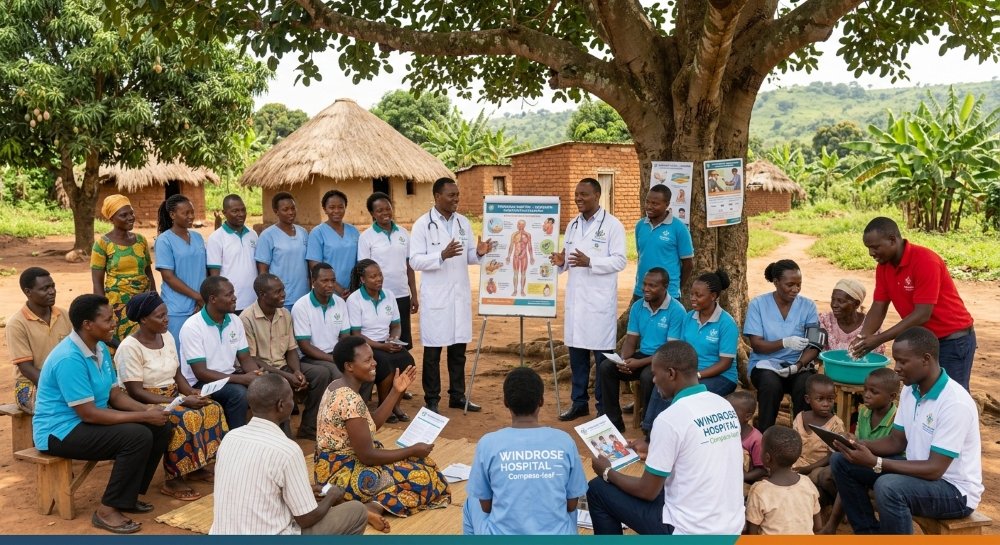
Windrose Hospital addresses this systemic crisis through a model that eliminates arbitrary profit margins and grounds service delivery in community-powered equity.
Rather than running on traditional fee-for-service frameworks that penalize low-income earners, Windrose Hospital structures its clinical operations around community health pooling and strategic cross-subsidization.
The core of this system is the “Pay-As-You-Wish” appointment pass, which establishes a baseline consultation entry point starting at 20,000 UGX. Under this policy, patients choose a contribution tier matched to their current financial capacity, removing the upfront fear of unexpected medical debt.
Crucially, lower costs do not imply reduced clinical standard. The operational model functions by leveraging multi-sectoral partnerships with non-governmental organizations, donor networks, and public health initiatives.
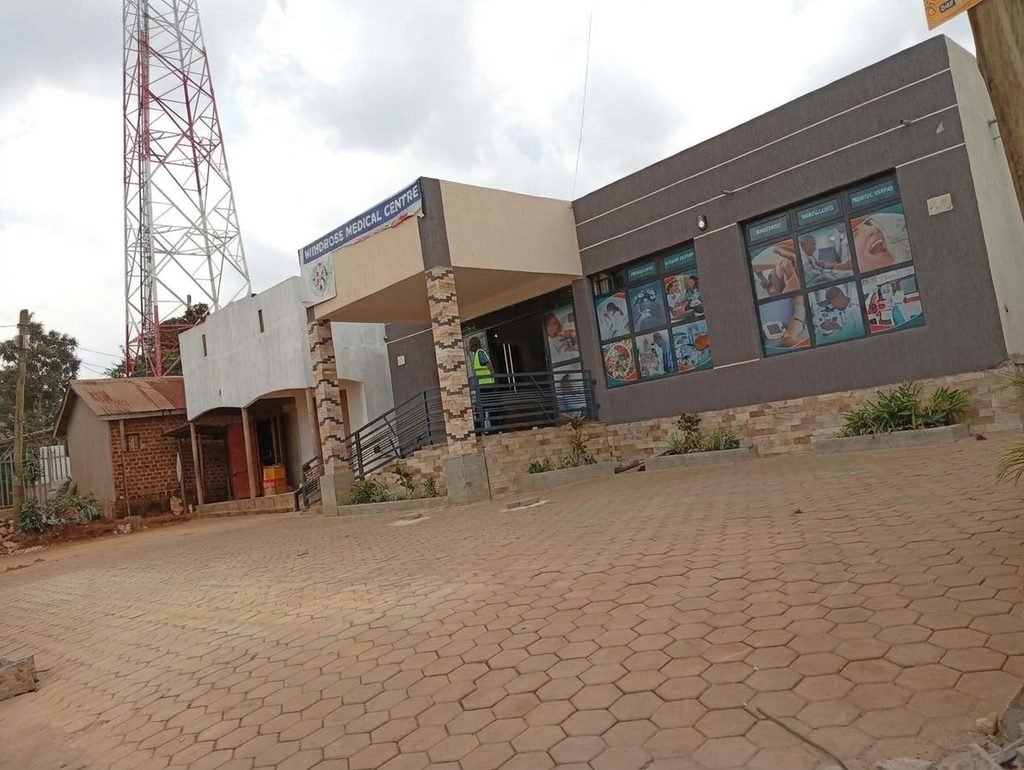
These strategic alliances assist in offsetting fixed overhead costs, securing essential pharmaceuticals at bulk institutional prices, and subsidizing complex diagnostic testing. By sharing capital expenses across partner networks, Windrose Hospital maintains fully equipped internal departments, including modern clinical laboratories, diagnostic imaging units, and specialist outpatient consultancies, without shifting that financial burden onto the patient.
Furthermore, this model integrates seamlessly into Uganda’s sector-wide health goals. The Ministry of Health’s Health Financing Strategy continually emphasizes the need to reduce out-of-pocket costs to under 15% to achieve Universal Health Coverage (UHC). By providing high-standard, low-barrier clinical care, Windrose Hospital demonstrates a practical framework for how non-state actors can support government UHC targets.
Ultimately, breaking financial barriers in Ugandan healthcare requires moving beyond traditional models. When healthcare facilities combine clinical rigour with financial flexibility, patients seek medical consultation early, treatment completion rates rise, and local families maintain both their health and their economic stability.